

Close




DESCRIPTION
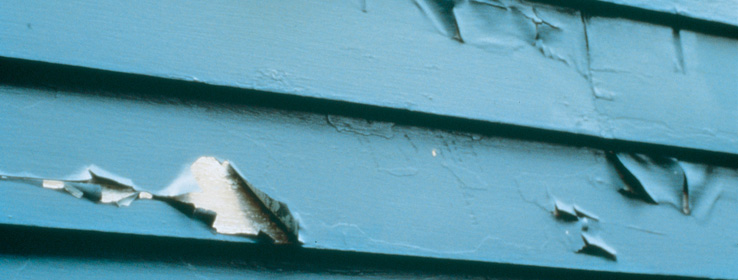
Loss of adhesion of a coating to the substrate (e.g. the surface that was painted) or an earlier coating. Where there is a primer and topcoat or multiple coats of paint, peeling may involve some or all of the coats.
POSSIBLE CAUSE
Seepage of moisture through uncaulked joints or worn caulk.
Leaks in roof or walls, or excess moisture escaping through the walls from the interior.
Painting over a dirty, wet, or glossy surface.
Painting over a coating that already has marginal adhesion.
SOLUTION
Remove old, loose, cracked caulk; prime as needed; and caulk with the appropriate product.
Find and repair any source of water.
Follow label and data page directions for proper surface preparation methods for the coating.
Test the coating in a 6" to 12" radius around any peeled areas to be sure its adhesion is adequate.
INTERIOR
(if needed)
Premium Wall & Wood Interior Latex
Multi-Purpose Interior Oil-Based/Undercoater
Loxon Concrete & Masonry
Duration Home®
Cashmere®
SuperPaint®
ProClassic®
Caulk
ProSelect® 1230A, 1100A, or Kitchen & Bath
EXTERIOR
Primer
(if needed)
Exterior Latex Wood Primer
Loxon Concrete & Masonry
All Surface Enamel Primer
Suggested Finish
Duration®
SuperPaint®
A-100®
WoodScapes®
Caulk
ProSelect® 1550A, 1230A, 1100A, or Window & Door
ConSeal™ Elastomeric Sealants


