

Close




DESCRIPTION
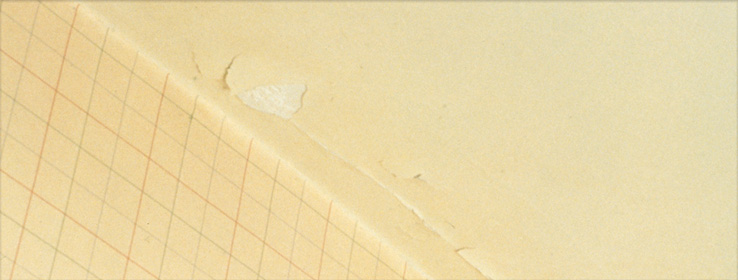
The splitting of a dry paint film through at least one coat. In its early stages, the problem appears as hairline cracks; in its later stages, flaking occurs.
POSSIBLE CAUSE
Use of a paint that has lower adhesion and flexibility properties.
Over-thinning or over-spreading the paint.
Inadequate surface preparation, or applying the paint to bare wood without first applying a primer.
Excessive hardening and embrittlement of paint as it ages, the coating loses the ability to expand and contract with temperature and humidity changes.
SOLUTION
Remove loose and flaking paint with a scraper or wire brush, sanding the surface and feathering the edges. If the flaking occurs in multiple layers of paint, use of a spackling compound may be necessary to make a uniform surface. Test the coating surrounding any peeled areas out about 6" to 12" to be sure the adhesion is adequate.
Prime bare wood or plaster before repainting.
Apply the coatings at the recommended spreading rate (e.g. the recommended total area that can be painted) and using the recommended thinning rate (e.g. the recommended percentage that a coating may be diluted).
INTERIOR
Primer
Multi-Purpose Interior Oil-Based/Undercoater
Loxon® Concrete & Masonry Primer/Sealer
Suggested Finish
Duration Home®
Cashmere®
SuperPaint®
ProClassic®
(if needed)
Multi-Purpose Interior Oil-Based/Undercoater
Loxon® Concrete & Masonry Primer/Sealer
Suggested Finish
Duration Home®
Cashmere®
SuperPaint®
ProClassic®
EXTERIOR
Primer
Loxon® Concrete & Masonry Primer/Sealer
All Surface Enamel Primer
Suggested Finish
Duration®
SuperPaint®
A-100®
(if needed)
Loxon® Concrete & Masonry Primer/Sealer
All Surface Enamel Primer
Suggested Finish
Duration®
SuperPaint®
A-100®


